Ionic Bond
Attraction between positive and negative ion
A bond formed through loss (by metal) and gain (by non metal) of electrons
Ionic Bond
Covalent Bond
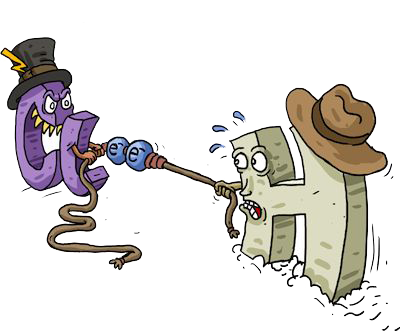
Formed through sharing of electrons
Ability of an atom to attract bond electrons to itself
Electronegativity
Volume ratio (H2 : O2)
2:1
Volume percentage (H2 : O2)
66.67% : 33.33%
Mass ratio (H2 : O2)
1:8
Mass percentage (H2 : O2)
11.11% : 88.89%
Angle in water molecule
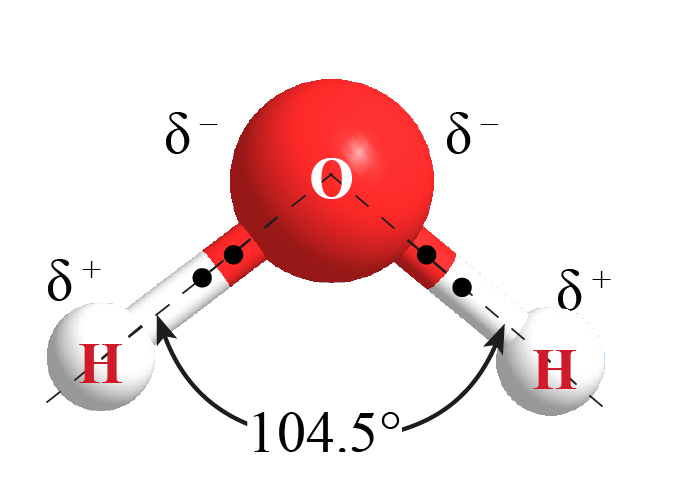
104.5
Water doesn't exist in pure form on Earth surface
but contains many ions and chemical substances that react with it in different ways.
Bond in water molecule
Polar Covalent Bond
Hydrogen (low electronegativity) carry
partial positive charge
Oxygen (high electronegativity) carry
partial negative charge
Boiling point of H2O is 100 celsius
As it form hydrogen bonds between its molecules
Boiling point of H2S is -61 celcius
As it doesn't form hydrogen bonds
As number of H-bonds increases
Boiling points increases
+Ve and -Ve ions surrounded by water molecules WITHOUT BREAKING BONDS
Hydration
pH scale
scale from 0 to 14 determine type of the solution
pH increases
[H] and acidity dec. and OH and basicity inc.
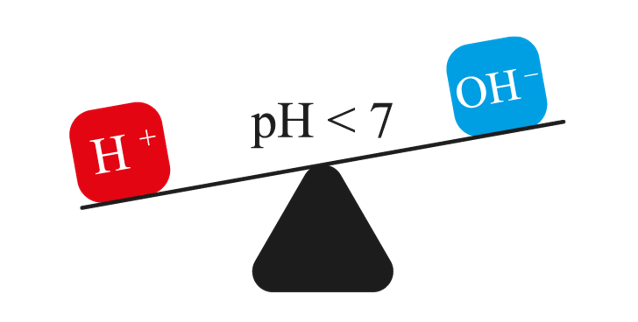
Acidic solution
pH < 7
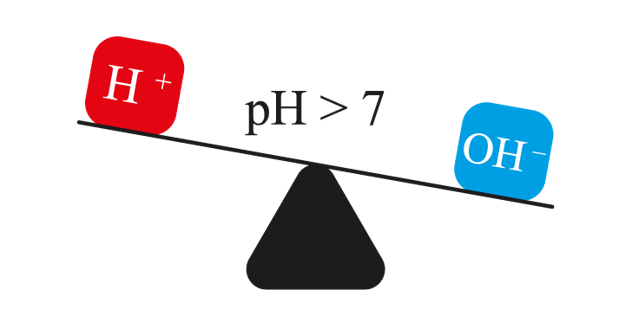
Basic solution
pH > 7
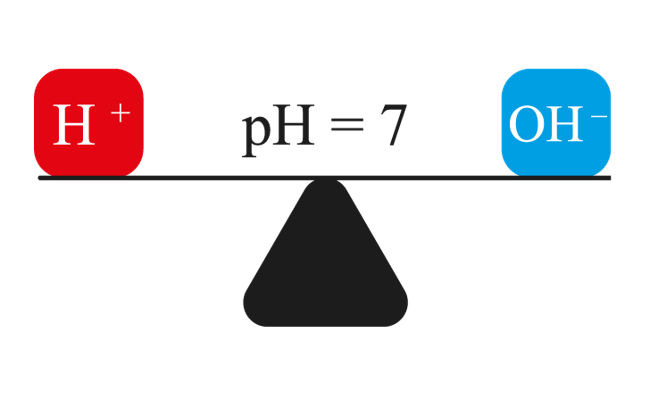
Neutral solution
pH = 7
Tools for measuring pH
pH meter (more accurate) and litmus paper
pH meter
more accurate
Strong acids (HCl, HBr, H2SO4, HNO3)
Completely Ionize
Strong bases (NaOH, KOH, Ca(OH)2, Ba(OH)2)
Completely Ionize
Hydrolysis
Binding ions with water by breaking down the bonds such as binding the NH4 + and HCO3 – ions with water.
Ammonium chloride (NH4Cl)
Acidic Solution (Hydrolysis)
Sodium chloride (NaCl)
Neutral Solution (No hydrolysis)
Ammonium bicarbonate (NH4HCO3)
Neutral Solution (Hydrolysis)
Sodium bicarbonate (NaHCO3)
Basic Solution (Hydrolysis)